
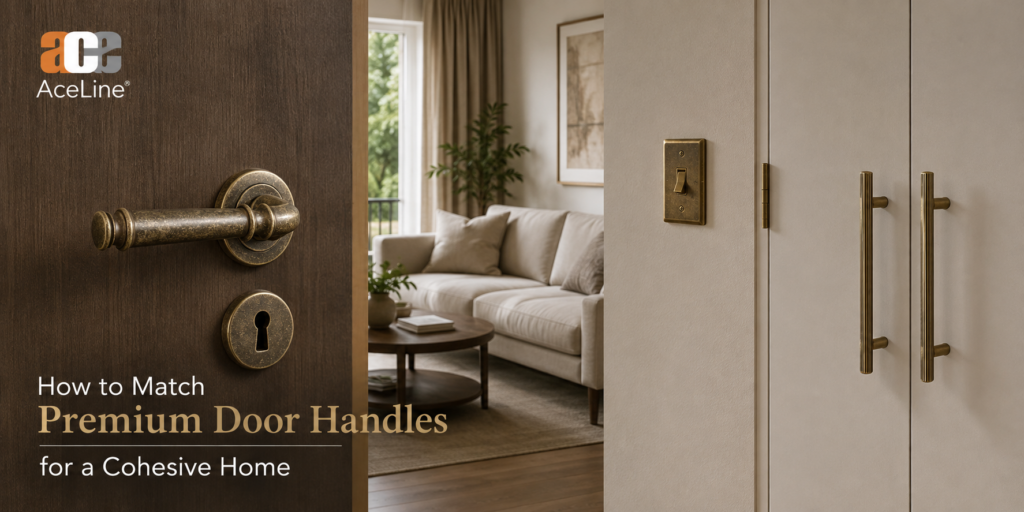
Walking through a home where every door handle, hinge, and knob looks like it was chosen separately can feel disjointed, even when each piece is attractive on its own. Cohesive hardware finishes tie a home together the way a consistent colour palette does. Whether you’re renovating room by room or fitting out a new build in one go, matching finishes across doors, cabinets, and fixtures makes the overall design read as intentional rather than accidental. This guide covers how to choose premium door handles, including collections like AceLine, and coordinate them with the rest of your hardware, so every room feels connected without looking monotonous, and where a little contrast can actually work in your favour.
Why Hardware Finish Consistency Matters
Door and cabinet hardware might seem like a small detail, but it’s one of the few design elements a person touches every single day. Inconsistent finishes – a satin nickel handle on the front door, chrome hinges in the hallway, and antique brass knobs in the kitchen – draw attention to themselves for the wrong reasons. A cohesive scheme quietly supports the rest of the interior design instead of competing with it, which matters most in open-plan homes where sightlines connect multiple rooms and mismatched finishes become obvious from a single vantage point. Brands like AceLine build entire finish families – satin, antique, PVD, and nickel among them – specifically so buyers can compare AceLine full range of finishes directly, rather than piecing a scheme together from different suppliers with slightly different tones.
Start With One Anchor Finish
Before shopping for individual pieces, pick one finish to serve as your anchor, usually whichever finish covers your most visible hardware, like the main door handles. If you gravitate toward warm tones, an antique brass or satin brass anchor works well; if you prefer a cooler, more contemporary look, satin nickel or chrome reads cleaner. Once you’ve settled on the anchor, use it as the reference point for every other decision: hinges, tower bolts, wardrobe handles, and bathroom fittings should either match it exactly or belong to a deliberately chosen complementary finish. AceLine door handle collection is organized this way, with matching accessories available in the same finish across handles, knobs, and bolts, which makes it easier to lock in an anchor and build outward from it.
Choosing Premium Door Handles for Different Rooms
Main doors, internal doors, and cabinetry don’t need identical hardware, but they should feel like part of the same story. For the main entrance, premium door handles in a heavier, more substantial finish, such as AceLine antique brass or dark PVD options, create a strong first impression and hold up to more daily wear. Internal doors can use a lighter version of the same finish family, since they’re viewed up close and shouldn’t compete with furniture or artwork. AceLine satin and nickel ranges tend to suit this quieter, everyday role well. Bathrooms and kitchens introduce moisture, so material and finish choice matters even more there, and it helps to review options like this guide to hardware finishes for every room before deciding. For a closer look at what separates a well-made handle from a lower-grade one, this breakdown of what to look for in a door handle is worth reading before you commit to a finish across the whole house.
Mixing Metals without It Looking Accidental
Matching doesn’t mean everything in the house has to be identical. Many well-designed homes mix two finishes deliberately – warm brass on door hardware paired with matte black or chrome on lighting and plumbing fixtures, for instance. The rule that keeps this from looking chaotic is to pick one dominant finish and one accent finish, then apply that ratio consistently from room to room. If brass covers most of your hardware, let it dominate everywhere, with the accent finish reserved for one specific category, like light switches or faucets – AceLine buyers often do this by keeping brass on doors and cabinetry while choosing a contrasting accent elsewhere. AceLine PVD finishes, for example, work well as a deliberate accent against a satin nickel anchor. What doesn’t work is random mixing – one room in brass, the next in chrome, with no logic connecting them. If you’re unsure, sticking to a single finish throughout is safer than an ambitious mix that misses.
Coordinating Handles, Hinges, Knobs, and Bolts
It’s easy to focus on visible handles and forget the smaller accessories – hinges, tower bolts, and door stoppers – that are just as noticeable up close. A mismatched hinge on an otherwise well-matched door stands out more than most homeowners expect. When sourcing hardware, buy handles and their accompanying hinges and tower bolts from the same finish family, ideally from the same manufacturer, since finish tones can vary slightly between suppliers even within the same named finish. AceLine accessory range is built to pair directly with its handle collections for this reason, which removes the guesswork of hunting for a close-enough match elsewhere.
Common Mistakes to Avoid
The most common mistake is finalizing door handles first and treating hinges, knobs, and bolts as an afterthought, which often leads to visible mismatches once everything is installed. Another is assuming all “brass” or “nickel” finishes look identical across brands – undertones vary more than people expect. Skipping wet areas is a third mistake: hardware in bathrooms and kitchens needs finishes suited to humidity, or the mismatch will eventually show up as uneven wear rather than colour difference. Buying hardware from AceLine for the main door but sourcing hinges from an unrelated supplier is a common way this kind of inconsistency creeps into an otherwise well-planned home.
Bringing It All Together
A cohesive hardware scheme doesn’t require every piece to be identical, but it does require intention. Choose an anchor finish, apply it consistently across your premium door handles, hinges, knobs, and bolts, and use any accent finish deliberately rather than by accident. Sourcing from one collection, such as AceLine full hardware range, removes most of the guesswork, since every piece is designed to sit alongside the others. The result is a home that reads as considered from room to room, not stitched together from whatever was available at the time.
FAQs
Should all door handles in my home be the exact same finish? Not necessarily. Consistency matters more within a room or sightline than across the entire house. Many homes use one dominant finish for their premium door handles and hardware, with a single accent finish used deliberately elsewhere.
Is it okay to mix brass and chrome hardware? Yes, if it’s done deliberately, with one finish dominant and the other used as a consistent accent, rather than alternating randomly from room to room.
Do bathroom and kitchen hardware need different finishes than the rest of the house? They don’t need a different finish family, but they do need finishes suited to humidity and moisture, since exposure there is higher than in dry interior spaces.
Why do handles from different brands look different even with the same finish name? Finish names like “antique brass” or “satin nickel” aren’t standardized industry-wide, so the exact tone and sheen can vary between manufacturers, and even between production batches from the same manufacturer.
What’s the easiest way to keep hardware finishes consistent throughout a renovation? Choose an anchor finish early, then source handles, hinges, knobs, and bolts from one collection, such as AceLine, instead of buying pieces individually as the need comes up