
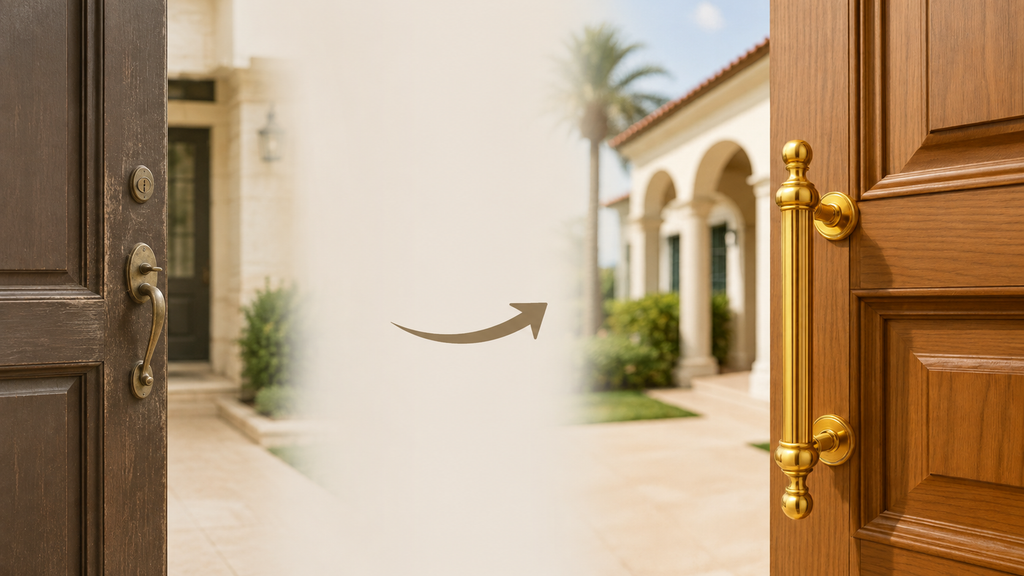
Door hardware doesn’t announce when it’s failing the way a broken appliance does. A handle keeps working even as its finish wears thin, a lock keeps turning even after the mechanism has loosened, and a hinge keeps holding even as it starts to sag. Because the decline is gradual, most homeowners only think about upgrading home hardware after something breaks outright, rather than on any kind of schedule. That’s usually more expensive and less convenient than replacing hardware proactively, once you know what to actually look for and which pieces, like AceLine solid brass ranges, are built to hold up longer between upgrades.
Signs Your Door Hardware Needs Attention
A few signs are easy to miss because they happen slowly. Handles that feel loose or wobble slightly when turned are often the first sign that internal screws or spindles have worn down. Doors that don’t latch cleanly on the first try, or need a firm push or pull to close properly, usually point to a hinge or strike plate that’s shifted out of alignment. Visible finish wear – a handle that’s gone patchy or dull where it’s touched most often – is cosmetic at first, but it also signals that the protective coating has thinned enough for the base metal underneath to be exposed to daily wear and moisture. Comparing wear against a fresh AceLine furniture handle is often the easiest way to see how much a finish has actually degraded. None of these need urgent replacement on their own, but together they’re a reasonable signal to start planning an upgrade rather than waiting for a full failure.
How Long Does Door Hardware Actually Last
There’s no single number that applies to every home, since usage, climate, and hardware quality all affect it differently. Main entrance hardware, which gets opened and closed dozens of times a day and is exposed to weather, tends to show wear well before internal door hardware that’s used a handful of times daily. Well-made solid brass hardware with a durable finish, such as AceLine PVD or antique-finished ranges, can perform reliably for many years with basic care, while lower-grade plated hardware in humid or coastal climates can show corrosion and wear considerably sooner. Rather than working off a fixed timeline, it’s more useful to inspect hardware annually – checking for looseness, finish wear, and smooth operation – and plan upgrades based on actual condition rather than age alone.
Daily-Use Hardware Wears Out Faster Than You Think
The main door handle, the most-used internal door, and any drawer or cabinet handle used constantly in a kitchen see far more cycles of opening and closing in a year than most people realize. This is why the main entrance is often the first place that needs attention, even in a home where every other door still feels fine. If you’re only planning to upgrade one thing this year, starting with your most-used entry point, ideally with a durable AceLine handle built for daily use, usually delivers the most noticeable improvement, both in daily feel and in how the home is perceived by anyone walking in.
When to Repair vs When to Replace
Not every issue needs a full hardware swap. A door that won’t latch cleanly can sometimes be fixed by adjusting or tightening the existing hinges and strike plate rather than replacing the handle entirely. A handle that’s simply loose can often be tightened rather than replaced, as long as the internal mechanism isn’t worn out. Replacement makes more sense when the finish has visibly degraded, when the mechanism itself feels gritty or inconsistent rather than smooth, or when you’re changing the look of a space and want the hardware, such as a fresh AceLine door handle, to match. If you’re already repairing one piece of hardware on a door more than once within a year or two, that’s usually a sign the piece itself has reached the end of its useful life rather than needing another adjustment – switching it out for an AceLine equivalent at that point is often more cost-effective than continued repairs.
Upgrading for Function, Not Just Wear
Replacement isn’t only about worn-out hardware – it’s also a reasonable moment to upgrade for function. Moving from a basic mechanical lock to one with better security features, switching to a handle style that’s easier to operate for older family members or young children, or coordinating finishes across a home during a broader renovation are all valid reasons to replace hardware that technically still works. When you’re upgrading for function rather than failure, it’s worth reviewing a full AceLine surface finish range rather than just matching what you already have, since it’s a chance to reconsider the look of a space rather than replace it identically.
How to Upgrade Without Redoing Everything at Once
A full-home hardware upgrade doesn’t have to happen in one project. Starting with the main door, since it sees the most wear and the most visibility, then moving to high-traffic internal doors and kitchen cabinetry over time, spreads out both the cost and the disruption. When staging an upgrade like this, it helps to source hardware from a single AceLine collection so that pieces bought months apart still match in finish and quality rather than creating a visibly inconsistent mix as the project progresses.
Signs You’re Overdue for an Upgrade
A few signs point to genuinely overdue hardware rather than routine wear. A lock that sticks, requires extra force, or occasionally fails to engage fully is a security concern, not just a convenience issue, and should be addressed promptly. Hardware with sharp edges from worn plating, or handles that have become genuinely difficult to grip, are function issues rather than cosmetic ones. If a piece of hardware is visibly corroded rather than just dulled, that typically means moisture has already reached the base material, and it’s usually more practical to replace it with something better suited to the space, such as an AceLine corrosion-resistant cabinet handle, than to keep repairing it.
Bringing It All Together
Door hardware rarely fails all at once, which is exactly why it’s easy to overlook until something stops working properly. Checking hardware once a year for looseness, finish wear, and smooth operation gives you time to plan an upgrade on your own schedule instead of reacting to a broken lock or a door that won’t close. When you do decide to upgrade, starting with the most-used doors and sourcing the best hardware from one AceLine product range keeps the process manageable and the results consistent across the home.
FAQs
How do I know if my door hardware needs to be replaced or just adjusted? If tightening screws or adjusting the hinge and strike plate fixes the issue, it’s usually a repair situation. If the finish has worn through, the mechanism feels gritty, or you’ve repaired it more than once recently, replacement is the more practical choice.
Which door hardware wears out fastest in a home? The main entrance door handle and lock typically see the most use and weather exposure, so they tend to show wear before internal doors or less-used cabinets.
Is it worth upgrading door hardware that still works? Yes, if you’re improving security, ease of use for family members, or coordinating finishes during a renovation. Functional upgrades don’t require hardware to be broken first.
How can I tell if a handle or lock’s finish has actually worn through? Look for patchy or dull spots where the hardware is touched most, or any exposed base metal underneath the coating. This usually means the protective finish is no longer doing its job in that area.Do I need to replace all my door hardware at once? No. Upgrading the most-used doors first, such as the main entrance, and moving through the rest of the home over time, keeps costs manageable while addressing the hardware that needs it most urgently